What people mean by soft washing and pressure washing
Soft washing generally pairs a cleaning solution with low-impact application and controlled rinsing. The chemistry and dwell time do much of the work on compatible organic growth, pollen, algae-like film, mildew-like staining, and atmospheric soil. The process still requires accurate dilution, surface testing, protection, public separation, plant care, runoff planning, and a rinse suited to the material. Low pressure is not a guarantee of safety; an incompatible product, excessive dwell, poor rinsing, or uncontrolled runoff can damage a surface or surrounding property.
Pressure washing relies more heavily on water impact. It can be useful on durable, compatible concrete, some paved areas, selected masonry, loading surfaces, and other zones where the surface condition and runoff plan support it. Too much pressure or an unsuitable nozzle can drive water into joints, remove mortar or coatings, etch concrete, damage finishes, or leave stripes. A Toledo commercial quote should explain where pressure is appropriate, where chemistry is more useful, and where neither process is a substitute for repair or restoration.
Match the method to Toledo materials and stain types
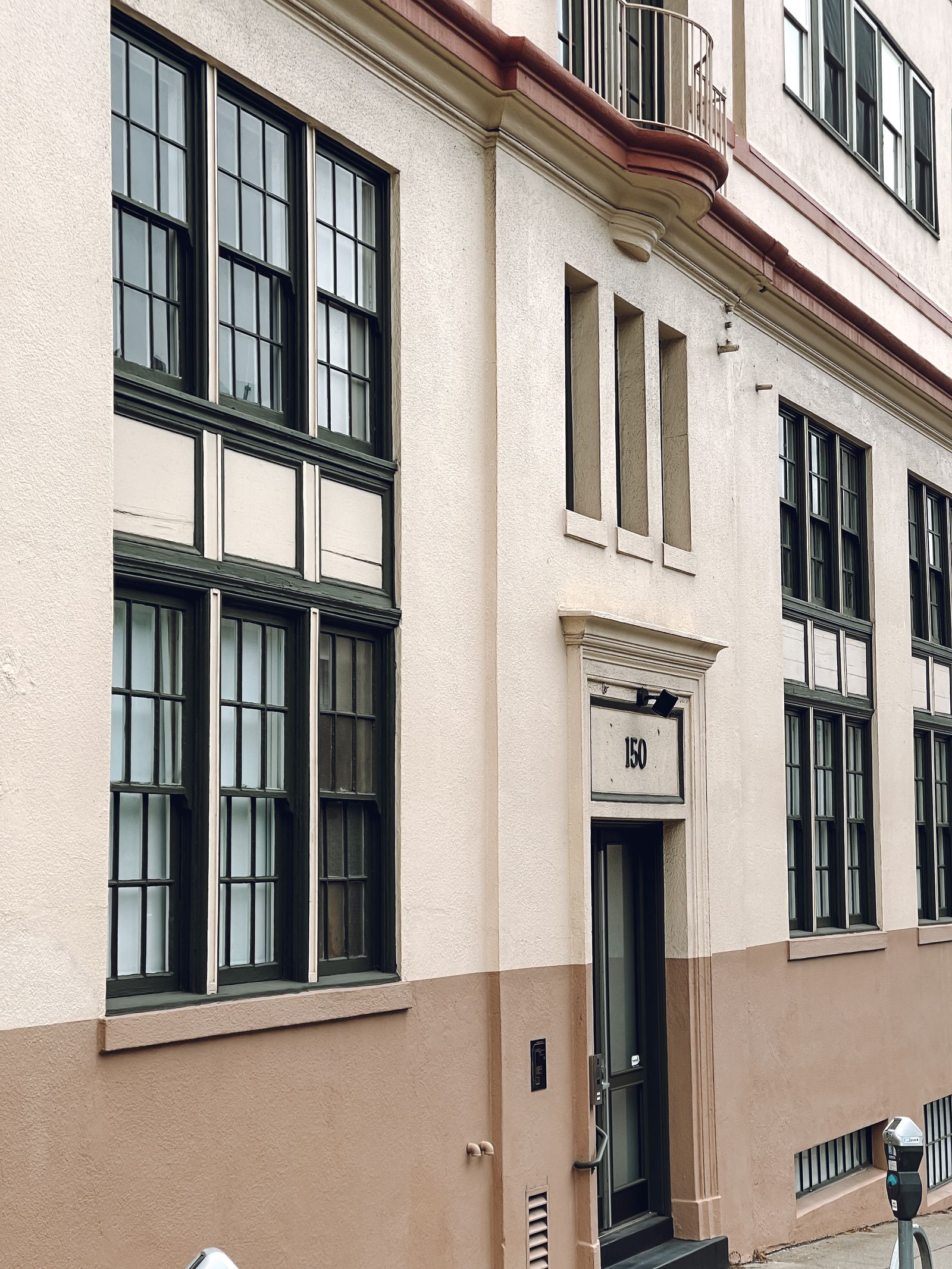
Brick and mortar require attention to joint condition, porosity, age, prior repairs, and water absorption. Concrete may tolerate a more direct rinse in one zone and need gentler treatment where it is polished, cracked, coated, or spalled. Metal panels can show oxidation, chalking, traffic film, or coating failure that will not respond like organic growth. Glass, EIFS, stucco, painted surfaces, sealants, stone, and composite panels need their own compatibility review. The same wall can contain multiple materials around a storefront, sign band, canopy, or repaired elevation.
Toledo's stain pattern often supplies clues. Green or dark organic film on shaded, damp elevations may be a candidate for a compatible soft-wash process. White crust, rust-colored bleed, black carbon, efflorescence, and streaks beneath a parapet may point to mineral deposits, oxidation, soot, salts, or water movement. Winter salt can collect near lower walls, garage ramps, curb lines, and loading docks. A method comparison is incomplete if it only discusses pressure and ignores what created the mark. Testing and documentation protect the facility from paying for the wrong treatment.
- Review brick joints, concrete condition, coatings, glazing, panels, sealants, and previous repairs.
- Identify whether the mark is organic, mineral, oxidized, salty, soot-based, or drainage-related.
- Use a small test area when finish history or cleaning response is uncertain.
- Separate facade cleaning from repairs, restoration, coating removal, and glass polishing.
Consider Toledo's corridors, industries, and public-facing schedules
A method that works on an empty warehouse may be inconvenient beside a busy hotel or medical entrance. Downtown offices, the Warehouse District, the Old West End, and riverfront properties may have pedestrians, events, curb parking, restaurants, tenants, and narrow work zones. Manufacturing and logistics facilities around North Toledo, Oregon, Rossford, Northwood, and the I-75 corridor may have trailers, shift changes, security, rail activity, production air intakes, and strict delivery windows. Healthcare and education sites near ProMedica, Mercy Health, the University of Toledo, and area schools may need notices, accessible routes, quieter periods, and a clean separation between visitors and equipment.
The quote should show how the selected method affects staging, dwell time, rinsing, noise, hoses, barriers, and the sequence of open entrances. A hotel may need guest arrival and event traffic protected. A plant may want loading lanes available during a shift change. A retailer may prefer work before opening. These details often determine whether a technically suitable method is operationally suitable. Cleaning is successful when the exterior improves while the property can continue serving customers, patients, students, employees, guests, and deliveries.
Great Lakes weather changes the decision and the schedule
Lake Erie moisture, cloud cover, wind, spring rain, summer humidity, snow, ice, road brine, and repeated freeze-thaw cycles can change both process and result. A damp shaded wall may need more drying time. Wind can move mist toward people, vehicles, landscaping, neighboring property, or an air intake. Rain can dilute chemistry and carry soil toward a low point or storm inlet. Freezing conditions can create unsafe walking surfaces and affect rinsing. A lower wall with salt staining may need an approach different from a north elevation with organic film.
A weather-aware plan includes a start-window review, wind limits, temperature and precipitation checks, lightning and ice pauses, drying expectations, and a reschedule process. It also includes a conversation about what happens when a test area shows that the mark is mineral, oxidized, deeply embedded, or connected to a drainage problem. No honest comparison can guarantee a uniform result across every elevation. The team should describe the intended result, limitations, and next step when the facade tells a different story in the field.
Where drone assistance fits in a method comparison
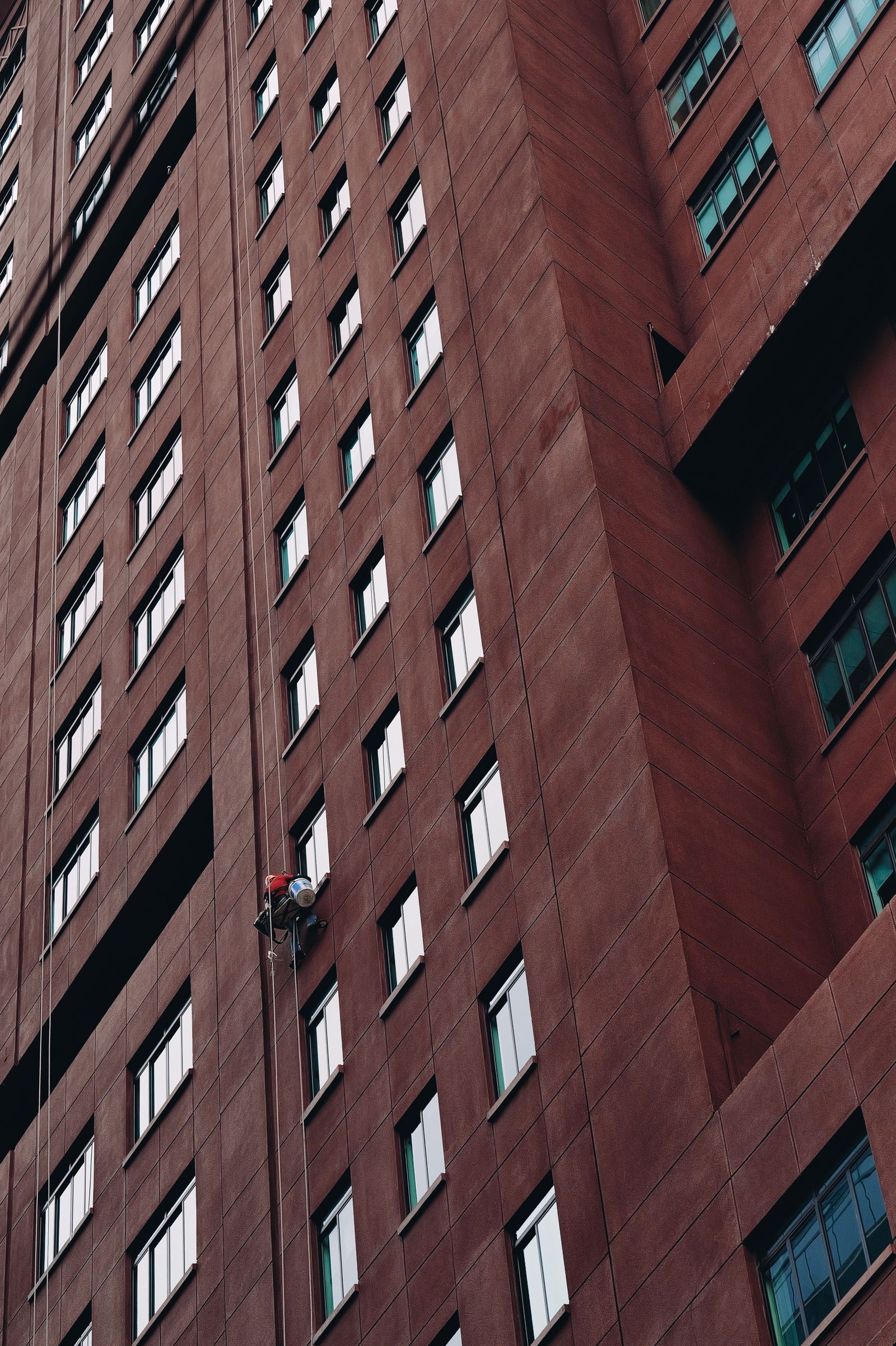
Drone assistance is an access option, not a third cleaning method. For a suitable broad upper wall, it may help position a controlled application or rinse without moving a lift along every bay. It may be considered when the property has a safe launch and recovery area, enough stand-off distance, visual control, workable wind, public separation, and a clear ground plan. A drone does not replace surface testing, chemistry selection, hand detailing, contact cleaning, repair review, or runoff management.
Toledo sites may have overhead utilities, trees, rooftop equipment, balconies, signs, rail lines, busy roads, neighboring buildings, and airport-related airspace considerations. Commercial operations must follow applicable Federal Aviation Administration requirements, and permission from the property owner does not answer every aviation question. If wind, people, vehicles, airspace, or spray drift cannot be controlled, a pole, lift, ground setup, or revised schedule may be more appropriate. The method should be chosen for the actual building rather than advertised as a universal solution.
Drainage and environmental controls belong in the comparison
Pressure and soft-wash projects both create water-management questions. Toledo properties may direct flow to curb inlets, storm drains, detention areas, grass swales, parking-deck low points, or neighboring pavement. The product, soil, rinse volume, slope, and local requirements matter. A nearby storm drain is not automatic permission for treated water or sediment to enter it. Before work, map the flow path, identify sensitive areas, and decide whether diversion, collection, recovery, filtration, reduced rinse volume, plant protection, disposal, or authority coordination is needed.
Protective planning also covers doors, accessible routes, vehicles, landscaping, outdoor dining, cameras, electrical equipment, air intakes, and public paths. A low-pressure process can still cause damage if it reaches a sensitive opening or creates a slippery route. A high-pressure process can be controlled in one zone but inappropriate on a weak joint or coating. A useful proposal documents the assumptions and stop conditions, records completed and limited areas, and explains any deposits that need restoration rather than promising that a wash will solve them.
How Toledo facility teams can choose confidently
Ask the provider to identify the facade materials, likely soil, proposed pressure range, cleaning chemistry, test-area process, protection plan, runoff assumptions, access method, weather triggers, and included elevations. Ask which areas will be cleaned by hand, pole, lift, ground equipment, or potential drone support. Ask what the proposal excludes, how public paths stay open, who can pause work, and how remaining mineral, oxidation, salt, repair, or drainage issues will be documented. These answers are more useful than choosing the word soft or pressure in isolation.
For a Toledo office, hotel, manufacturer, logistics property, healthcare facility, school, retail center, or mixed-use building, send the address, photos, approximate height, problem areas, schedule constraints, water access, and desired outcome. Call +1 239-351-2897 or email contact@dronebuildingcleaners.com to get in touch with Drone Building Cleaners. We can discuss the building's surfaces, operating day, weather window, access, drainage, and the practical next step for a quote.